2026-10-26 ·
Why Santee Pipes Burst and How to Prevent It
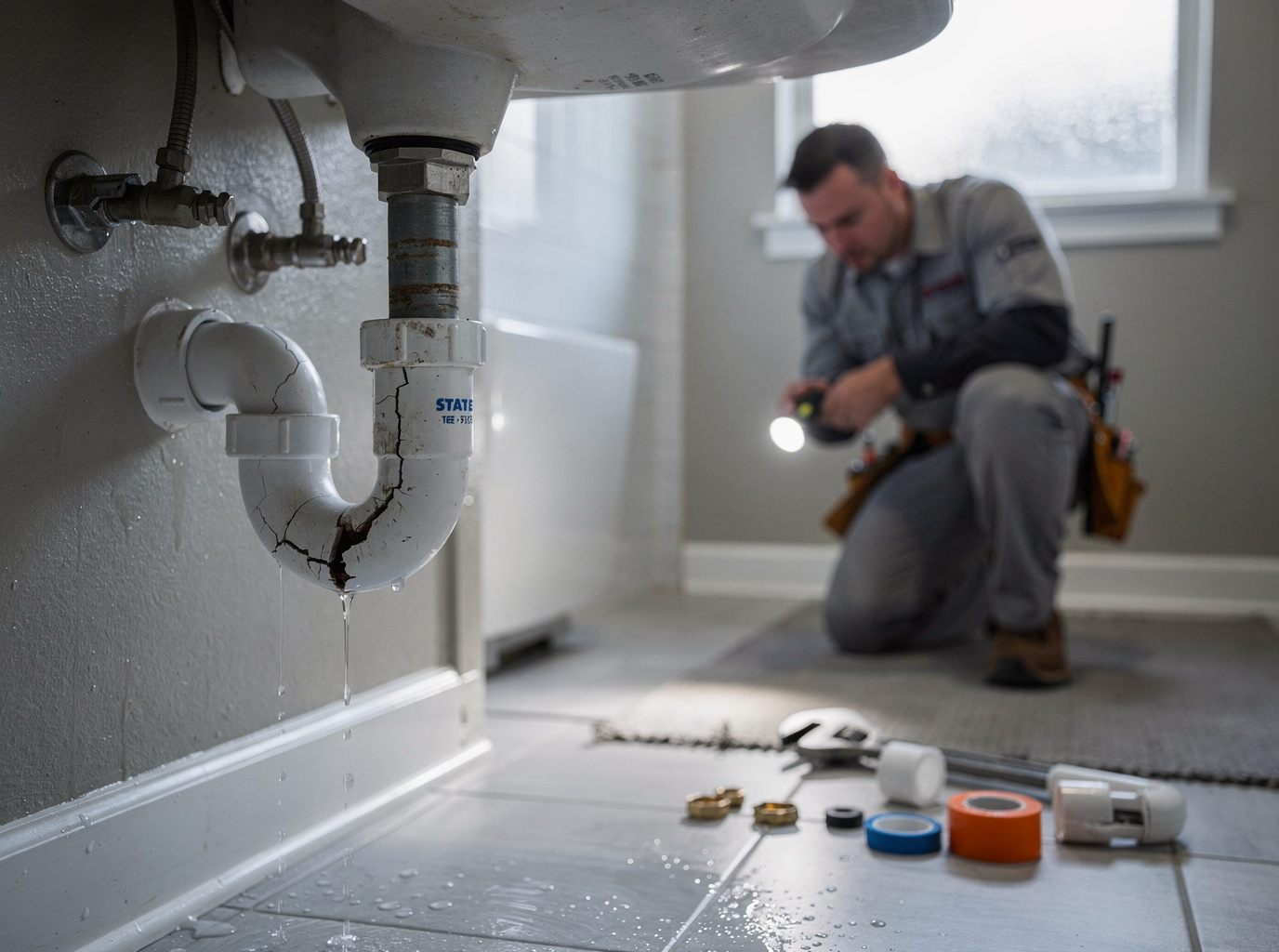
Pipes in Santee burst most often when corrosion weakens older lines or when cool winter nights cause contraction in uninsulated sections. Homes built before 1980 in Carlton Hills and East Santee see these failures more frequently because galvanized steel reaches 40 to 50 years of service life. Mild Mediterranean summers keep soil stable, yet December and January lows near 40 degrees can still stress joints. Regular checks catch thinning walls before leaks appear.
Common Causes of Burst Pipes in Santee
Corrosion eats through galvanized and copper lines over decades, especially where water from the San Diego County supply carries higher mineral content. Sudden pressure spikes from valve closures or nearby construction in West Santee can finish the job on already thinned sections. Tree roots from Mission Trails Regional Park properties invade sewer laterals and exert outward force on supply lines. In East Santee neighborhoods, shifting soil after rare heavy rains moves pipes at joints. These factors combine when a 30-year-old line finally gives way during a cool evening. Homeowners notice reduced flow or discolored water weeks before the actual break.
How Local Climate and Housing Age Play a Role
Santee's cool winters rarely drop below freezing, yet 40-degree nights still contract metal pipes enough to stress soldered joints in homes near Santee Town Center. Warm dry summers accelerate external corrosion on buried lines when soil dries and cracks. Houses in Lakeside and nearby areas share the same 1960s to 1980s construction boom, meaning many supply lines now exceed 45 years. Water heater temperature settings above 120 degrees speed internal scaling that narrows pipes and raises pressure. Checking expansion tanks yearly prevents these pressure spikes from reaching older sections.
Practical Prevention Steps for Santee Homeowners
Insulate exposed pipes in crawl spaces and garages before November using foam sleeves rated for 40-degree conditions. Replace rubber hoses on washing machines and water heaters every five years to eliminate a common failure point. Install a whole-house pressure regulator set between 50 and 60 psi if readings exceed 80 psi on the main line. Schedule annual inspections of shut-off valves and visible supply lines, especially in Carlton Hills homes built on slopes. Monitor water bills for unexplained increases that signal slow leaks behind walls. These steps reduce emergency calls during the cooler months when demand rises.
When to Contact an Emergency Plumber
Shut off the main valve immediately if water sprays from a wall or ceiling, then call for emergency plumber service available 24 hours, 7 days. Persistent low pressure after flushing toilets or running multiple fixtures points to a partial break that needs prompt attention. Sewage odors near the foundation often trace back to a supply line failure that has undermined the sewer lateral. A plumbing repair technician can isolate the section, replace the damaged run, and restore flow without excavation in most cases. Delaying action turns a $400 to $800 repair into a $2,000 to $4,000 water damage claim.
Related Resources for Santee Residents
Homeowners weighing water heater options can review Water Heater Repair or Replacement in Santee: How to Decide to see how temperature settings affect pipe longevity. Those noticing slow drains alongside pressure issues may benefit from a sewer camera inspection before buying or selling. Properties in Lakeside share similar pipe materials and can use the same prevention checklist. This service covers Santee and el cajon, lakeside, san diego. Call 619-555-0199.